Xander Braun · 21 September 2026
Workforce Adaptations in Response to AI Integration Within Broadband Providers' Operations
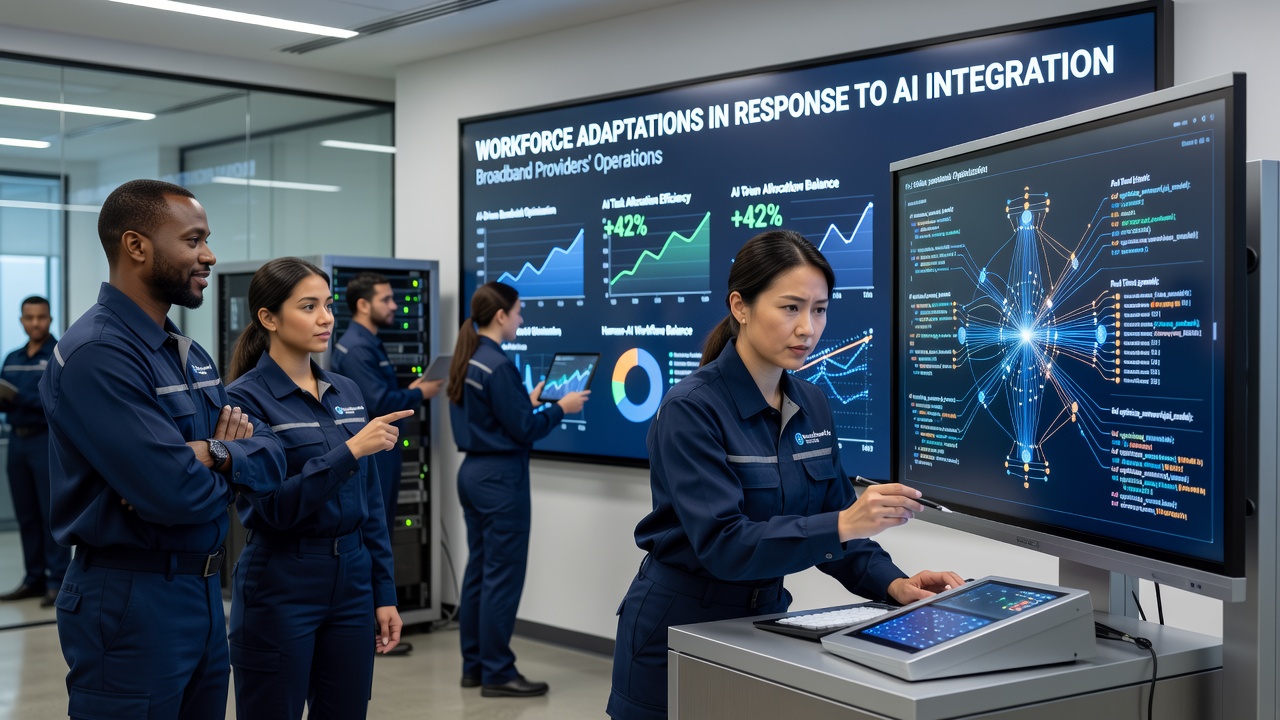
Broadband providers have accelerated AI adoption across network monitoring, predictive maintenance, and customer interaction systems since 2024, which has prompted measurable shifts in workforce composition and skill requirements. Data from industry reports indicate that automation handles routine fault detection and bandwidth allocation tasks, while human staff focus on oversight, exception handling, and strategic planning. Those who manage these transitions note that roles once centered on manual configuration now emphasize algorithm validation and cross-functional coordination with data science teams.
AI Applications Reshaping Daily Operations
Network operations centers deploy machine learning models to analyze traffic patterns in real time, reducing the need for constant human intervention during peak loads. Predictive analytics flag potential cable degradation days before outages occur, allowing crews to schedule targeted repairs rather than emergency responses. Customer service platforms route inquiries through conversational agents that resolve standard billing or speed complaints, yet complex escalations still route to specialized agents trained in both technical troubleshooting and AI tool interpretation.
According to figures released by the International Telecommunication Union, global broadband operators reported a 27 percent reduction in manual monitoring hours between 2023 and 2025, with corresponding increases in positions requiring AI system supervision. This pattern appears across multiple regions, including North America, Europe, and parts of Asia-Pacific, where regulatory filings show similar staffing reallocations.
Emerging Roles and Skill Requirements
Traditional field technician positions have evolved to include drone-assisted inspections and augmented-reality overlays that guide repairs using AI-generated schematics. New titles such as AI ethics auditor and network data steward have appeared in organizational charts at several major providers, reflecting the need for oversight of automated decision systems. Research from the Australian Communications and Media Authority highlights that employees in these hybrid roles typically complete certification programs covering both telecommunications fundamentals and basic machine-learning concepts.
Upskilling initiatives often combine vendor-led workshops with internal mentorship pairings, pairing veteran engineers with data analysts to translate operational experience into model training parameters. Observers note that programs lasting six to nine months produce the highest retention rates among participants who transition from legacy roles.
Regional Implementation Patterns Through September 2026
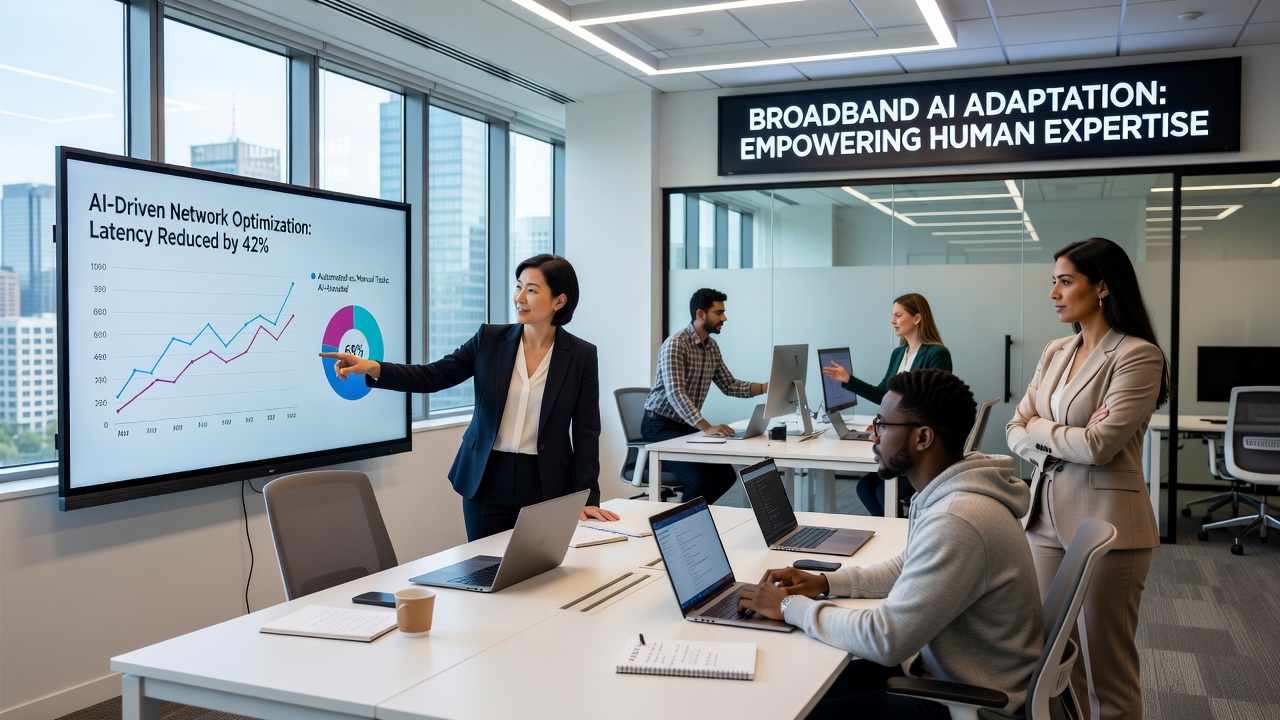
By September 2026, several North American carriers had completed phased rollouts that tied AI deployment milestones to workforce planning cycles. European operators, facing stricter data-protection statutes, invested earlier in compliance training that covers both regulatory requirements and AI transparency obligations. Canadian providers, guided by CRTC guidelines on service reliability, documented how AI-driven outage predictions improved response times while requiring additional staff trained in regulatory reporting interfaces.
These adaptations follow similar trajectories yet differ in pace according to local labor markets and existing union agreements. In markets with strong collective bargaining traditions, joint labor-management committees review AI tool deployments before full integration, ensuring job descriptions update through negotiation rather than unilateral change.
Training Infrastructure and Retention Strategies
Providers partner with community colleges and technical institutes to create modular courses that count toward both internal advancement and external credentials. Curriculum modules cover topics ranging from interpreting neural network outputs to managing automated customer interaction logs for audit purposes. Retention data collected by several operators show that employees who complete these programs experience lower turnover than peers in unchanged roles, partly because new competencies open pathways into planning and analytics departments.
Yet challenges persist around reskilling timelines and geographic distribution of training resources. Rural operations teams sometimes face longer wait times for in-person sessions, prompting development of virtual reality simulators that replicate field scenarios without requiring travel to central facilities.
Conclusion
Workforce adaptations to AI integration within broadband operations continue to unfold through structured training, role redesign, and regional policy alignment. Available data through September 2026 demonstrate measurable shifts toward positions that combine domain expertise with oversight of automated systems, supported by partnerships between operators, regulators, and educational institutions. These changes reflect ongoing operational realities rather than temporary trends, as providers maintain networks that grow more complex each year.